The Difference Between Whiskey and Moonshine
Moonshine has a reputation problem. Mention it and people picture a jar, a still in the woods, and something that strips paint. Some of that history is real. Most of what’s sold as moonshine today is something quite different.
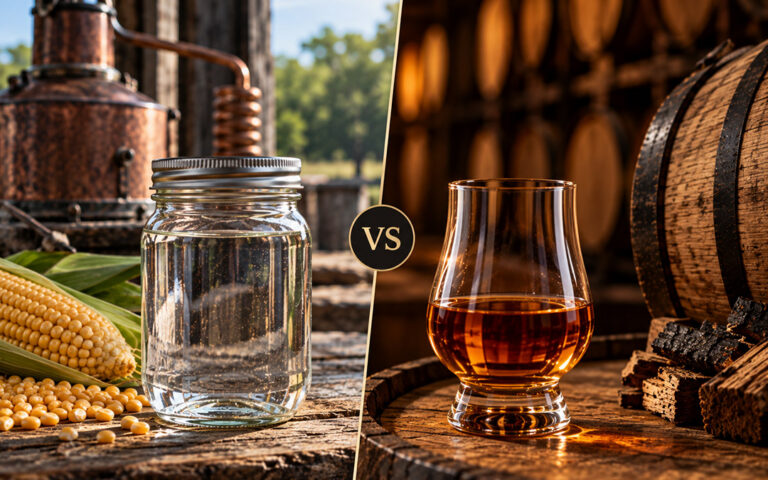
The actual difference between whiskey and moonshine comes down to one thing: time in a barrel.
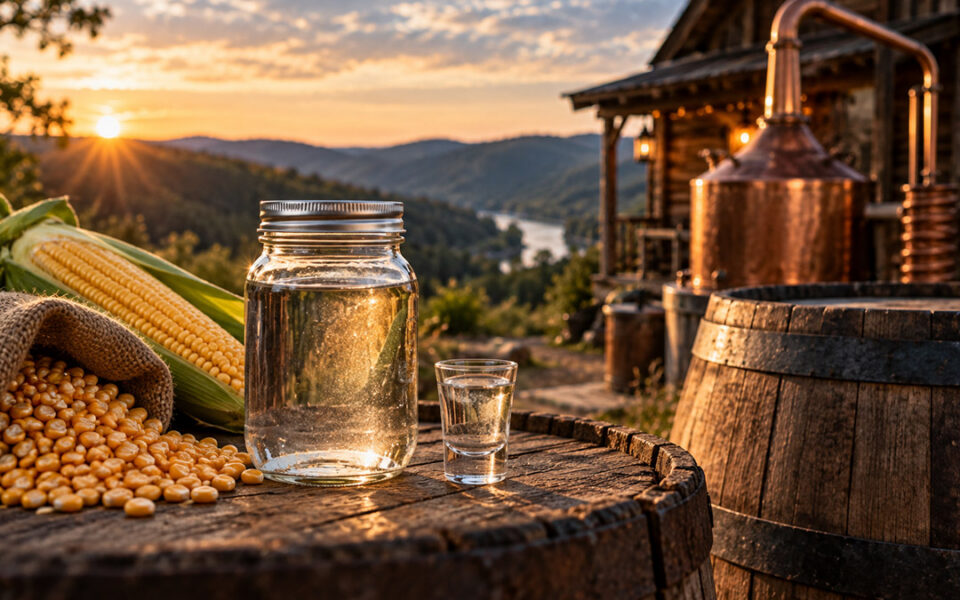
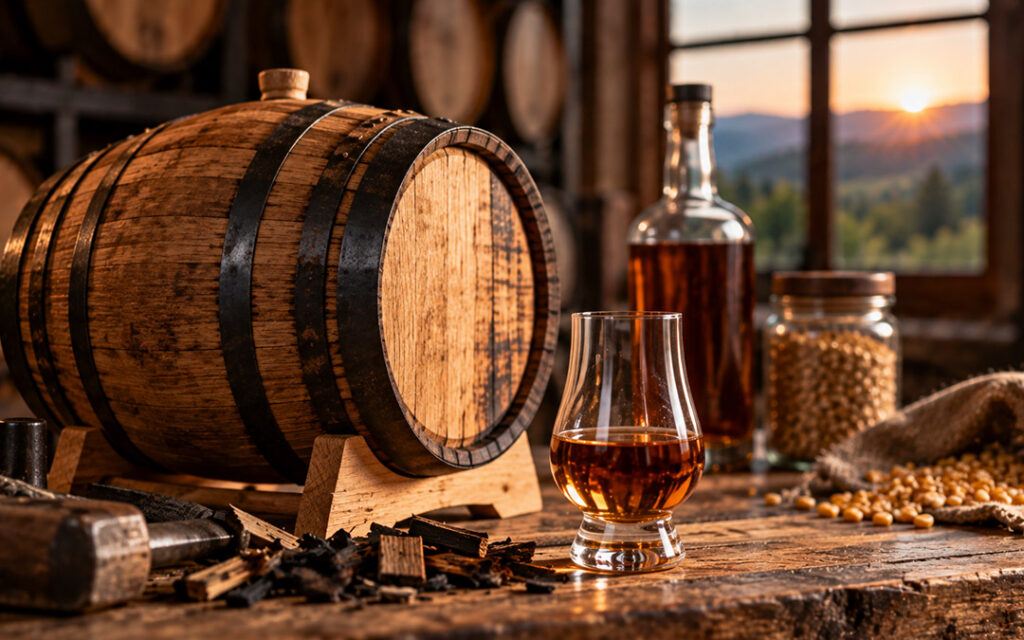
Whiskey is grain spirit that has been aged in wood. Moonshine is the same kind of grain spirit bottled without aging, which is why it’s clear rather than amber. Historically the word meant illegally distilled liquor; today it’s a legal, taxed category sold by licensed distilleries.
How Whiskey and Moonshine Are Made
Both begin identically. Grain is milled, mixed with water and cooked, fermented with yeast, and then distilled. What comes off the still at that point is clear, high-strength spirit, and it’s the same liquid whether it’s destined to become whiskey or moonshine.
From there the paths split. Whiskey goes into a barrel and waits. Moonshine goes into a bottle.
Everything people associate with whiskey comes from the barrel, not the grain: the color, the vanilla, the caramel, and the oak. Take the barrel out and you’re left with the spirit’s own character: corn sweetness, a little grain, and a clean finish.
Why Is Moonshine Clear?
There’s no wood involved, so there’s nothing to color it. Any moonshine you see with color in it has had something added, usually fruit or spice.
This is also why moonshine tastes more directly of what it’s made from. A barrel is a very effective mask. Without one, a poorly made spirit has nowhere to hide, which is a reasonable argument that clear spirits are harder to make well than aged ones.
Why Was Moonshine Illegal?
The word originally described spirits made at night, out of sight of tax collectors, by the light of the moon. In the United States that tradition runs back to the 1790s, and Western Pennsylvania is where it started. Farmers here distilled surplus grain into whiskey because whiskey was easier to transport and sell than grain, and when the federal government taxed it, the Whiskey Rebellion followed.
The tradition carried into Appalachia and through Prohibition. It’s also, indirectly, the origin of stock car racing. Runners modified their cars to outpace revenue agents and started racing each other for sport.
None of that applies to what’s sold today. Moonshine on a shelf is made by a licensed distillery, taxed, tested, and legal. If you’re buying moonshine in PA today, that’s what you’re getting. The name survived; the outlaw part didn’t.
What Is Flavored Moonshine?
Most moonshine sold now is flavored: peach, apple pie, cherry, and so on. The base is unaged corn spirit, and real fruit and sugar are added after distillation.
Quality varies enormously here. The cheap version is neutral alcohol with syrup stirred in. The version worth drinking starts from a spirit that tastes good on its own and uses real fruit. You can tell them apart easily: the good ones taste like the fruit, and the poor ones taste like candy.
Whiskey vs. Moonshine, Compared
| Whiskey | Moonshine | |
|---|---|---|
| Aged in Wood | Yes | No |
| Color | Amber to deep brown | Clear |
| Main Flavor Source | Barrel plus grain | Grain, plus any added flavoring |
| Typical Strength | Usually 80–125 proof | Varies widely |
| Legal Status Today | Legal, taxed | Legal, taxed |
Taste Whiskey and Moonshine Side by Side
We’re a craft whiskey distillery in PAthat makes both whisky and moonshine from the same base spirit, which makes the comparison easy. Put our unaged moonshine next to our white whiskey select and then next to 3799 Bourbon, and you’re tasting one spirit at three points along its life.
Our flavored moonshine range runs to twenty-two flavors if you’d rather skip straight to the fun part. Or taste all three side by side with us. Our distillery tours run seven days a week and finish with a guided tasting.
Frequently Asked Questions
Is moonshine just unaged whiskey?
Essentially, yes. If it’s made from grain and bottled without barrel aging, that’s the whole difference.
Is moonshine stronger than whiskey?
Not necessarily. Strength depends on how it’s cut before bottling, not on whether it’s aged. Plenty of moonshine is bottled at ordinary strength, and plenty of whiskey is bottled well above it.
Is it legal to make moonshine at home?
No. Distilling spirits at home without a federal permit is illegal in the United States, regardless of quantity or whether you sell it. Buying it from a licensed distillery is entirely legal.
Why does moonshine have a bad reputation?
Because unregulated production genuinely was dangerous. Bad equipment and bad practice caused real harm. That has nothing to do with a licensed, tested product.
Does moonshine go bad?
No. Spirits at this strength don’t spoil. Flavored versions are best drunk within a reasonable time for taste rather than safety.